Completed Completion report

Youth Productivity Network

Youth Agribusiness and Market Access

A two-year intervention connecting practical production and post-harvest skills with collective purchasing, value addition, and local markets.

Period
February 2024 – November 2025
Location
Busia County · Siaya County
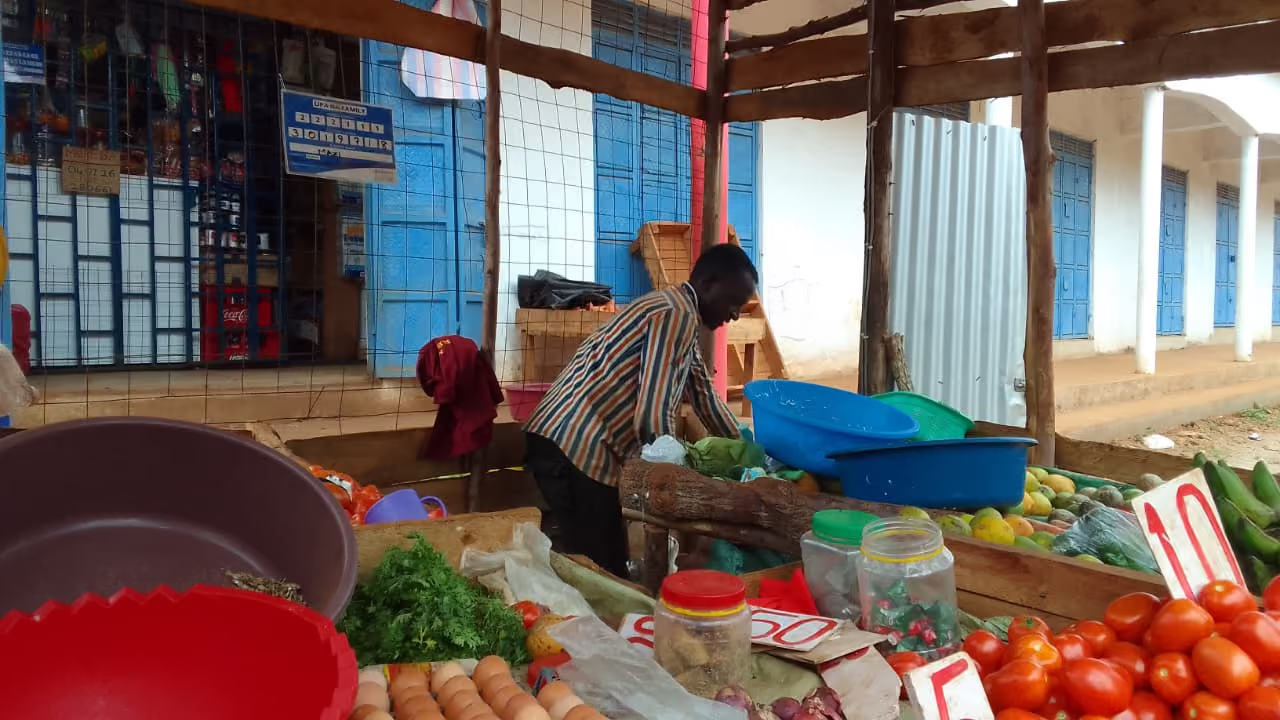
A produce vendor sorting stock at a local market stall.

Results at a glance

120 young producers and traders completed training
8 producer groups completed a full market cycle
14 buyer and service-provider relationships established

Intervention overview

The case for this work

01

Context

Young producers and food traders often operate at small scale, absorb high input costs, and lose value through weak handling, storage, and buyer access. Technical training alone is insufficient when participants cannot aggregate produce or negotiate from reliable market information.

02

Our response

Participants worked in producer groups around selected local value chains. Field learning covered climate-smart production, post-harvest handling, simple value addition, quality requirements, group governance, costing, and introductions to buyers and agricultural service providers.

Beneficiaries

Who the intervention serves

Young producers, food traders, and participant-led producer groups

Objectives

  1. 01

    Improve practical production, handling, and value-addition practices.

  2. 02

    Reduce avoidable post-harvest loss within participating groups.

  3. 03

    Strengthen collective access to inputs, services, market information, and buyers.

Delivery

Activities and implementation

  • Value-chain selection and participant production baseline
  • Demonstration sessions on climate-smart production
  • Post-harvest handling and simple value-addition training
  • Group governance, costing, and aggregation support
  • Buyer meetings and local market days
01

Feb–Jun 2024

Value-chain and group preparation

Participants selected viable activities, completed baselines, and agreed group working arrangements.

02

Jul 2024–Jun 2025

Production and handling cycles

Demonstration learning, field support, aggregation, and post-harvest improvements ran across two cycles.

03

Jul–Nov 2025

Market linkage and transition

Groups met buyers, reviewed margins, and adopted continuation plans before close-out.

Measurement

Results framework

Result Indicator Baseline Target Verification
Participants adopt improved production and handling practices. Participants applying at least three promoted practices 22% 70% Field-observation checklists and participant records
Producer groups reduce post-harvest loss. Average self-recorded loss across supported product cycles 24% 14% Group stock, sales, and loss records
Groups access buyers beyond one-off retail sales. Groups completing at least one aggregated sale 1 6 Delivery notes, buyer confirmations, and group sales records

Inclusion and safeguarding

Participation by design

  • Recruitment prioritised young women and young people with limited access to land through trading, aggregation, and service roles.
  • Demonstrations used locally available tools and combined written, visual, and practical instruction.

Risk management

Risks addressed in delivery

Weather shocks disrupt production and demonstration schedules
Stagger activities, promote water- and soil-conscious practices, and maintain more than one value-chain option.
Buyer interest does not translate into reliable transactions
Verify requirements early, avoid exclusivity, and retain multiple local market channels.

Sustainability

What continues beyond delivery

  • Participant groups retain governance, costing, and aggregation tools for future cycles.
  • Relationships with extension officers, suppliers, and buyers continue without AYCP acting as a permanent intermediary.

Work with AYCP

Build practical opportunities with young people

AYCP works with institutions, community actors, and aligned partners who can strengthen programme learning, reach, and long-term value.

Discuss a partnership