Proposed Investment case

Young Climate Stewards

Youth Climate Resilience and Community Action

A proposed two-year intervention supporting young people to understand local climate risks, organise practical responses, and help communities strengthen everyday resilience.

Period
Proposed 24-month intervention
Location
Busia County · One additional county to be selected with partners
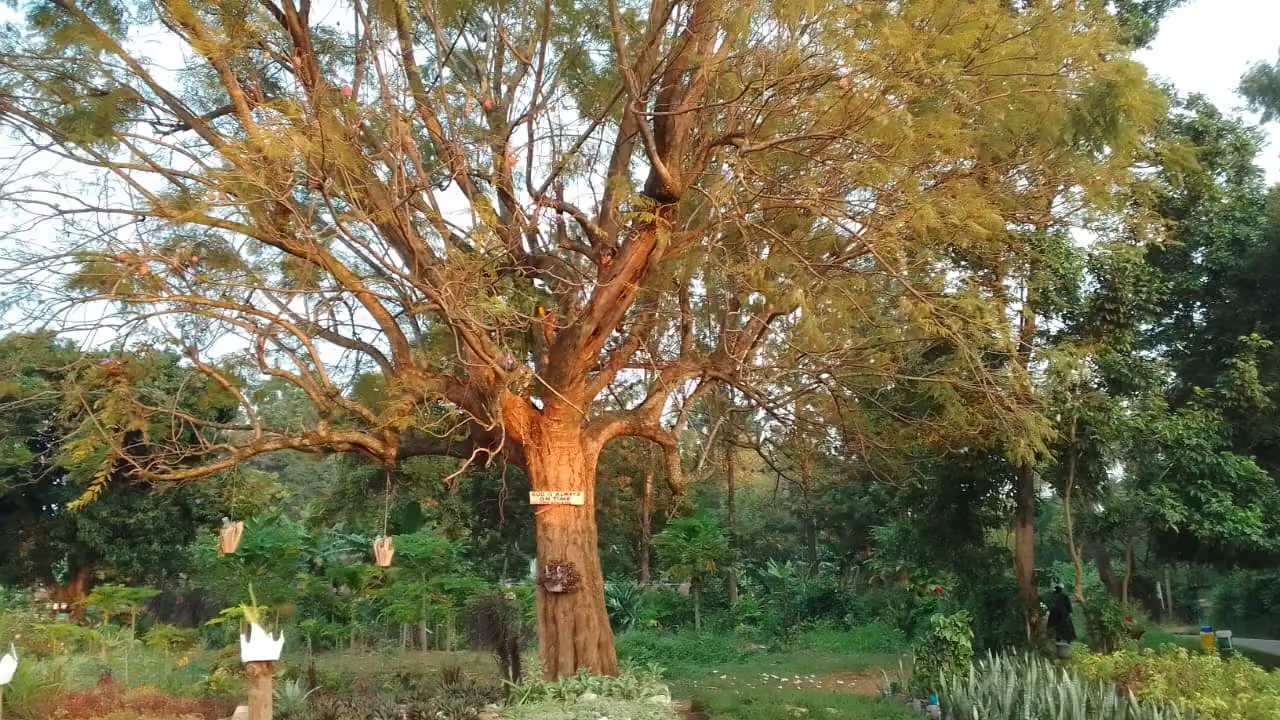
Established trees and varied vegetation in a community garden.

Planned scale

150 young climate team members proposed for training
10 community climate-risk and action plans proposed
20 locally selected adaptation activities planned

Intervention overview

The case for this work

01

Context

Climate pressures are experienced locally through changing rainfall, flooding, declining soil quality, unmanaged waste, and stress on water and food systems. Young people are frequently invited to awareness events but have fewer opportunities to analyse local risks, design responses with their communities, and follow those responses through implementation.

02

Our response

AYCP would prepare youth climate teams to combine practical environmental learning with participatory risk mapping and small community action projects. Teams would work with residents and relevant technical actors to select feasible measures such as water conservation, soil protection, waste reduction, drainage care, environmental learning, and locally suitable green spaces.

Beneficiaries

Who the intervention serves

Young people living in communities affected by flooding, drought, waste, soil degradation, and pressure on local water sources

Objectives

  1. 01

    Build practical climate knowledge and community-facilitation skills among young people.

  2. 02

    Produce locally grounded climate-risk maps and community action plans.

  3. 03

    Implement and monitor small adaptation activities selected with participating communities.

  4. 04

    Strengthen constructive engagement between youth teams and relevant local institutions.

Delivery

Activities and implementation

  • Climate literacy, safeguarding, and community-facilitation training
  • Participatory climate-risk and resource mapping
  • Community selection and design of practical adaptation activities
  • Delivery of small youth-led environmental action projects
  • Seasonal monitoring, public learning sessions, and institutional dialogue
01

Months 1–4

Inception and climate-team preparation

Confirm locations, select youth teams, establish safeguards, complete baseline work, and deliver practical climate learning.

02

Months 5–10

Community risk mapping and action design

Youth teams work with residents and technical actors to document risks, existing resources, and feasible local responses.

03

Months 11–20

Community action cycles

Selected activities are implemented and monitored across relevant rainfall and seasonal periods.

04

Months 21–24

Learning, handover, and continuation

Teams review evidence, share learning, agree continuing responsibilities, and complete institutional follow-up.

Measurement

Proposed results framework

Result Indicator Baseline Target Verification
Young people can analyse and communicate local climate risks. Youth team members completing the practical climate and facilitation assessment 0 120 Training records, assessments, and facilitator observation
Communities have usable climate-risk and action plans. Community plans validated by residents and a relevant technical actor 0 10 Signed plans, validation records, and community meeting notes
Locally selected adaptation measures are implemented and maintained. Adaptation activities meeting their agreed six-month maintenance standard 0 16 Site monitoring, activity records, photographs, and custodian confirmation

Inclusion and safeguarding

Participation by design

  • Youth-team recruitment would balance gender, disability inclusion, geography, and participation by young people outside established environmental groups.
  • Community mapping would include the experiences of women, people with disabilities, farmers, traders, and residents of areas facing higher exposure.

Risk management

Risks addressed in delivery

Communities select activities that exceed the intervention's technical or financial capacity
Publish clear selection criteria and require feasibility review before an activity is approved.
Seasonal changes delay implementation or make short-term monitoring misleading
Schedule activities around local seasons and monitor across more than one relevant weather period.
Small projects lose local ownership after initial delivery
Name custodians, agree maintenance responsibilities, and include continuation evidence in completion criteria.

Sustainability

What continues beyond delivery

  • Youth teams retain reusable mapping, facilitation, monitoring, and action-planning tools.
  • Community plans identify responsible local actors and low-cost actions that can continue beyond donor support.
  • Learning from completed activities is packaged for use by subsequent Young Climate Stewards cohorts.

Work with AYCP

Build practical opportunities with young people

AYCP works with institutions, community actors, and aligned partners who can strengthen programme learning, reach, and long-term value.

Discuss a partnership